Beyond the Queue: A Kent SME’s Practical Route to Smoother EU Deliveries in 2026
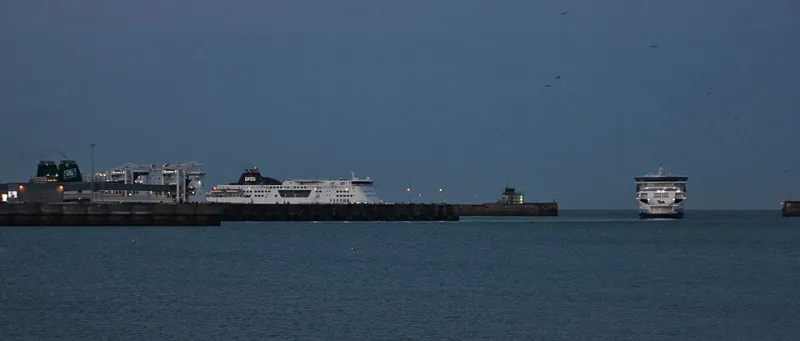
Photo: Stefan Oemisch (Germany), CC BY-SA 4.0, via Wikimedia Commons
For businesses in Dover, Folkestone, Ashford and the wider county, sending goods to Europe can feel tantalisingly close. The port and the Eurotunnel terminal are on the doorstep, and a truck can reach Calais in a little over an hour once it is through the border. Yet the shortest geographical route is not automatically the simplest administrative one. In 2026, a cross-Channel consignment succeeds or fails on preparation long before the vehicle joins the queue.
This guide is not a substitute for advice from a customs broker or freight forwarder. It is a practical framework for Kent SMEs that want fewer surprises, clearer costs and more credible delivery promises.
Why geography alone is not a delivery plan
Kent’s location remains a genuine advantage. It gives local businesses access to frequent crossings, a concentration of hauliers and a range of route options that many inland firms cannot match. That proximity can shorten transit times and reduce the need for long UK feeder journeys.
However, proximity also compresses the time available to correct errors. If a commercial invoice is incomplete when the vehicle reaches Dover, the problem cannot be solved by driving faster. If a goods movement reference is missing when a driver arrives at the Eurotunnel terminal in Folkestone, the crossing may be missed regardless of how well the rest of the journey has been planned. The practical lesson for SMEs is that border readiness is an administrative discipline, not simply a transport choice.
The paperwork that must be right before the vehicle moves
Most avoidable delays begin with incomplete or inconsistent data. Before a cross-Channel shipment is booked, a Kent business should confirm the commercial terms and ensure the documents match the goods actually being sent.
- Confirm the agreed Incoterms in writing, so it is clear who arranges transport, customs clearance and insurance.
- Check that the buyer’s EORI number and registered details are correct where these are required.
- Prepare a commercial invoice that describes the goods accurately, including quantity, value, currency and the reason for export.
- Use the correct commodity codes and keep a record of how the classification was reached.
- Provide a packing list that matches the invoice and the physical consignment.
- Check whether the goods are subject to restrictions, licences or additional controls.
- Keep proof of export and copies of declarations for the required record-keeping period.
A common source of friction is a mismatch between the invoice, the packing list and what is loaded on the vehicle. A pallet described as one line item on the invoice but presented as several different products at the border creates questions that take time to resolve. Consistency is not a clerical nicety; it is part of the delivery promise.
GVMS readiness for Kent exporters
The Goods Vehicle Movement Service, usually referred to as GVMS, is central to how movements through ports are controlled. Hauliers use it to obtain a goods movement reference, or GMR, before boarding. The SME’s role is to ensure that the underlying declarations and references are correct and supplied in good time.
A frequent weakness is treating GVMS as the haulier’s sole responsibility. The haulier can only generate a valid GMR if the customs data is complete and linked correctly. Kent businesses should therefore agree a clear cut-off time for providing references, nominate a contact who can resolve queries during the booking window, and ask the haulier to confirm that the GMR has been successfully created.
For regular exporters, it is worth reviewing the process monthly rather than only when something goes wrong. Keep a simple record of missing references, incorrect codes and late document changes. Patterns often reveal a training need or a weak point in the sales-to-dispatch handover.
Ferry or Eurotunnel: matching the route to the consignment
Dover ferry services and the Folkestone Eurotunnel terminal both offer viable routes to the continent, but they are not interchangeable for every load. Ferry operators provide frequency and capacity across a range of sailings, which can suit high-volume or less time-sensitive movements. Eurotunnel offers fixed departure windows and can be attractive for time-sensitive pallets or vehicles that benefit from a drive-on, drive-off format.
Neither option is universally better. The right choice depends on the consignment, the driver, the onward haul and the customer’s delivery window. A business sending a small number of pallets to a scheduled European customer may value the predictability of a booked tunnel crossing. A business moving larger or unusual loads may find that ferry capacity and sailing frequency provide more flexibility.
When comparing quotes, look at total door-to-door cost and reliability rather than the crossing fare alone. Include collection, port check-in, border clearance, the crossing, onward delivery and any likely waiting time. A cheaper crossing that leaves the vehicle exposed to a longer recovery period after a documentation query may not be the cheaper delivery.
Building realistic delivery windows around border checks
Cross-Channel delivery windows should be built from the border outwards, not from the sales desk inwards. Start with the customer’s required delivery date, then work back through onward haulage, crossing time, check-in, clearance and collection. Add a sensible contingency for new routes, peak periods and public holidays.
For a first shipment with a new customer or a new commodity, it is prudent to allow at least one working day of contingency. That buffer should be visible in the internal plan even if the customer is offered a tighter commercial window. If a customer genuinely needs a guaranteed slot, use a carrier service that provides tracked status and clear customs milestones, and state the assumptions in writing.
Kent SMEs should also distinguish between transit time and delivery time. A vehicle may cross the Channel quickly but still miss a booked delivery slot because the recipient’s goods-in team closes at midday. The border is only one part of the timetable.
A practical checklist for Kent SMEs
- Confirm Incoterms and commercial terms before booking.
- Validate EORI details and buyer information.
- Classify goods correctly and check for restrictions.
- Match invoice, packing list and physical consignment.
- Book a haulier with the right GVMS and customs capability.
- Agree a cut-off for declaration references and keep a contact available.
- Choose ferry or Eurotunnel by total reliability, not headline fare.
- Track the GMR and crossing status, not just the vehicle’s UK collection.
- Keep proof of export and review delays monthly.
Kent businesses cannot control border queues or every check that takes place at a port. They can control the quality of the data they provide and the realism of the promises they make. The county’s geographic advantage is strongest when proximity is supported by disciplined administration and a delivery plan that expects the border to be part of the journey.