Cover That Holds: A Kent SME’s Guide to Courier Driver Resilience in 2026

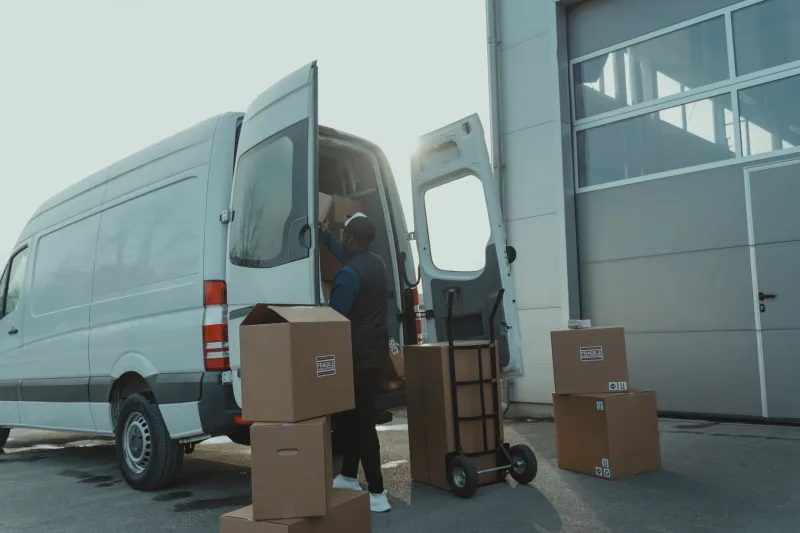
Photo: courier driver loading delivery van in Kent industrial estate UK, via www.connect.de
The courier sector’s driver question is often framed as a national shortage. For Kent businesses, the practical issue is more local: whether the operator collecting from a trading estate in Maidstone or delivering to a high street in Folkestone has enough trained, available and properly supported drivers to meet the promises made at the point of sale. In 2026, that question deserves a place in every delivery review.
Driver cover is not only a human resources matter for the courier. It is a continuity issue for the SME that relies on predictable collections, timed deliveries and a clear answer when something goes wrong. A single absent driver can delay a dispatch, disrupt a customer promise and create unnecessary pressure on storage, customer service and cash flow. The businesses that manage this risk well tend to treat driver resilience as part of procurement, not as an operational detail to be discovered later.
Why driver cover is a business continuity issue
Kent’s delivery geography makes driver availability especially important. A route that serves Dartford and Gravesend may face different pressures from one covering Thanet, Swale or the rural lanes around Sevenoaks. Crossing the Thames, navigating roadworks on the M20 or A2, and meeting tight urban delivery windows all place a premium on drivers who know the area and can make sound judgments under time pressure.
When a courier partner lacks depth in its driver pool, the effects rarely stay confined to one consignment. Collections are rescheduled, vehicles are re-routed, agency cover is brought in at short notice and account managers begin offering explanations rather than solutions. For an SME, that can mean missed marketplace dispatch deadlines, disappointed customers and additional administrative work. The risk is highest when a business has concentrated its delivery volume with a single provider and has not tested that provider’s contingency arrangements.
Recruitment and retention pressures in 2026 are not uniform. Some operators continue to report difficulty filling twilight shifts, weekend rotas and roles that require early starts. Others have found stability through longer induction periods, clearer shift patterns and stronger links with local training providers. The difference matters to SMEs because it affects the quality of cover behind the service they buy.
Recruitment channels that work in Kent
Kent’s labour market is not one market. North Kent has different transport links and commuting patterns from East Kent, while rural areas present their own recruitment challenges. Courier operators that recruit well tend to use several channels rather than relying on a single advert. These can include local Jobcentre Plus networks, community job boards, driver referrals, logistics training providers and partnerships with further education colleges across the county.
The strongest operators do not wait for peak season to begin recruiting. They maintain a pipeline of interested drivers, keep in contact with former staff and build relationships with training providers throughout the year. For an SME, it is reasonable to ask how a courier partner sources drivers in the areas it serves. A vague answer about national recruitment is less reassuring than a clear explanation of local induction, shadowing and route familiarisation.
Shift patterns and retention
Retention is often a rota problem before it is a pay problem. Drivers who face unpredictable start times, last-minute changes and unclear expectations are more likely to leave. Operators that offer transparent schedules, guaranteed hours where possible and fair allocation of routes tend to retain experience. That experience has a direct commercial value: a driver who knows a business park’s loading arrangements or a retail unit’s access restrictions is less likely to lose time on the road.
SMEs can ask whether their account will be served by a named driver or a small regular team. Consistency is not always possible, particularly for same-day or specialist services, but it is a useful indicator of how a courier partner manages its workforce. It is also worth asking how the operator covers holidays, sickness and school-holiday periods. These are routine absences, not exceptional events, and a resilient provider should be able to explain its cover model without hesitation.
Training partnerships and standards
Driver cover is not only about numbers. It is also about competence. Courier work involves safe loading, secure handling, customer-facing behaviour, returns processing and awareness of high-value consignments. Formal Driver CPC training may be part of the picture, but SMEs should look for evidence of practical induction, route shadowing, refresher training and clear procedures for subcontractors.
Training partnerships with Kent colleges and logistics providers can help operators build a more reliable workforce, but the benefit depends on how the training is applied. An SME does not need to audit a partner’s training programme in detail. It is enough to ask how new drivers are inducted, how performance is monitored and what happens when a driver is unfamiliar with a route or a customer’s delivery instructions.
Warning signs in a courier partner
A courier partner may be under driver pressure without saying so directly. SMEs should watch for patterns rather than isolated incidents. Repeated last-minute rescheduling, vague explanations about driver availability, inconsistency in the drivers who attend site and a reluctance to discuss contingency arrangements are all signals worth investigating.
Other warning signs include heavy reliance on agency cover without a clear induction process, no named account contact, poor service-level reporting and an inability to explain how collections are protected during peak periods. A provider that cannot describe its cover by postcode area may still deliver well in normal conditions, but it may struggle when demand rises or a driver is absent.
Practical steps for Kent SMEs
- Ask for a written driver cover plan for your collection postcodes, including arrangements for holidays, sickness and peak demand.
- Include service credits, communication expectations and contingency requirements in courier contracts where appropriate.
- Share forecasts early so the operator can align driver cover with expected volume.
- Maintain a secondary option for critical routes, even if it is used only occasionally.
- Review service-level reporting monthly and look for patterns in late collections or failed deliveries.
- Check how subcontractors are vetted and whether they are subject to the same induction and security standards.
- Keep loading bays, paperwork and collection points ready so driver time is not lost on site.
Preparing for the rest of 2026
Peak season planning is already underway for many Kent businesses. Before Black Friday and the Christmas period, it is worth testing a courier partner’s driver resilience through a simple tabletop exercise. Ask what would happen if a regular driver were absent, a vehicle broke down or a road closure affected a key route. A credible answer will involve named contacts, alternative arrangements and clear communication, not general reassurance.
Kent’s courier driver shortage will not be solved by a single recruitment campaign, and SMEs cannot control the labour market. They can, however, choose partners that evidence their cover, retain experienced staff and communicate honestly when pressure builds. The empty seat is a warning sign; the right questions turn it into a managed risk.