Perishable Priorities: A 2026 Courier Guide for Kent's Food and Drink Makers
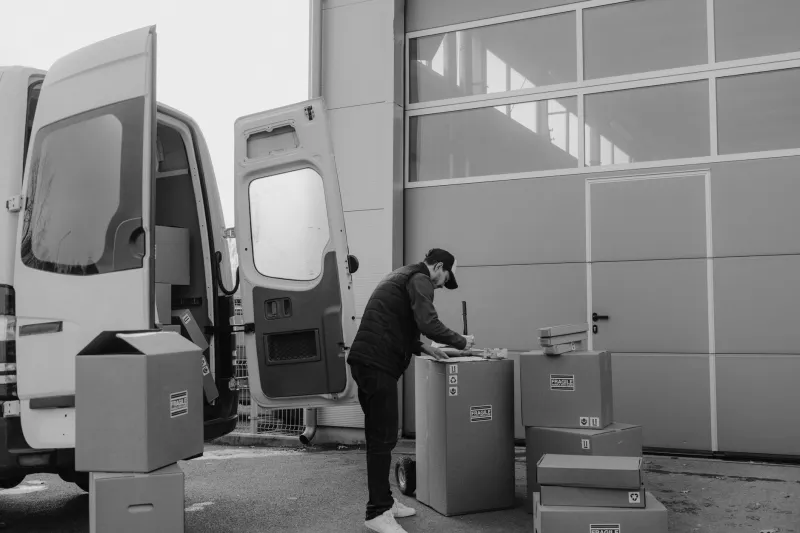
For Kent's food and drink producers, the courier is not simply the final transport leg. It is the last stage of production. A chilled consignment that arrives warm, a crate of bottles that has been tipped, or a bakery order that misses its delivery window can undo careful work in the brewhouse, kitchen or vineyard. In 2026, the county's small producers need a delivery plan that reflects the product rather than a generic parcel tariff.
Begin with the product, not the price
Before comparing courier quotes, classify each product line by three practical risks: temperature sensitivity, fragility and shelf life. An ambient fruit cake and a chilled dairy product may leave the same bakery, but they do not need the same service. Bottled wine and beer are heavy and breakable. Casks and kegs require pallet handling and secure strapping. Fresh produce, seafood and prepared foods may need a validated chilled environment from collection to delivery.
A useful starting point is to write a short handling statement for each line. It should state the required temperature range, maximum journey time, stacking limits and any fragility warnings. That statement then becomes the basis for the courier brief, the packaging specification and the evidence pack if something goes wrong.
Same-day, overnight and pallet: where each fits
The right service depends on urgency, volume and how much handling the consignment can tolerate.
| Service | Best suited to | Main strengths | Points to watch |
|---|---|---|---|
| Same-day | Short-shelf-life chilled goods, urgent restaurant drops, high-value samples, fragile single consignments | Direct route, fewer handlings, later collection cut-offs | Higher cost; practical radius; traffic-dependent journey times |
| Overnight | Ambient and chilled parcels for national retail or e-commerce, planned bakery dispatches | Broader coverage, consolidated network, predictable parcel tracking | Longer dwell time; collection cut-offs; hub handling; limited temperature control unless specified |
| Pallet | Kegs, cases, bulk vineyard orders, wholesale deliveries | Less individual handling, efficient for volume, suitable for loading bays | Access requirements; pallet stability; may be slower for urgent or small drops |
For chilled and frozen goods, confirm what the courier can actually provide. A refrigerated vehicle at collection is not the same as a validated cold chain through a sorting hub. Where temperature control is critical, ask for the route, expected transit time and any data-logging option. For fragile bottles, same-day or dedicated pallet movement may reduce the number of times the consignment is loaded and unloaded.
Collection timing and route length
For perishable Kent produce, the clock starts at collection, not at the depot. A late-afternoon pickup for an overnight service can leave a chilled consignment waiting several hours before it begins its main journey. Where shelf life is short, an early collection is often more valuable than a faster headline transit time.
Route length also matters. A producer near Ashford, Maidstone or Canterbury may reach the M20 or M2 quickly, but a rural vineyard or bakery can face narrow lanes and seasonal traffic before the courier reaches a main road. Same-day journeys into London or across the Thames can be affected by Dartford Crossing delays and M25 congestion. Build these realities into promised delivery windows rather than treating them as exceptions.
A simple dispatch calendar helps. Mark collection cut-offs for each service, identify products that cannot travel on a Friday afternoon, and avoid promising next-day delivery when the collection falls after the courier's perishable cut-off. For wholesale customers, agree delivery days in advance and keep a contingency slot for urgent orders.
Packaging that survives the journey
Packaging should be tested against the expected journey, not just the product. Insulated liners and gel packs need to be sized for the season and transit time. A box that performs well on a mild spring morning may fail during a warm July afternoon or a cold December night. For chilled goods, consider a temperature logger on representative consignments to check that the pack performs as intended.
Fragile bottles need individual protection, dividers and adequate cushioning. Double-wall boxes may be appropriate for heavier vinegary or bottled products. Casks and kegs should be stable on the pallet, with strapping and edge protection where needed. Bakery goods may require rigid trays to prevent crushing. Reusable crates can be useful, but only if the courier has a clear returns process.
Labels that do the work
Clear labelling reduces avoidable disputes. Each consignment should show the consignee's full address and contact number, the producer's details, the product type and any handling instruction such as keep chilled, fragile or this way up. Where relevant, include the batch code and dispatch date. Handwritten notes can be missed; pre-printed labels are more consistent.
Place labels where they remain visible after wrapping and palletising. For pallet consignments, label the pallet itself as well as individual boxes. If a consignment contains mixed products with different temperature requirements, separate them rather than relying on a single instruction.
Proof of condition before and after transit
Spoilage and damage claims are easier to resolve when evidence is agreed in advance. A practical proof-of-condition routine includes timestamped photographs of the packed consignment, the seal or tamper-evident closure, and the label at collection. For chilled goods, record the temperature at dispatch and, where possible, include a logger. Keep the collection note signed by the courier and retain the batch details.
On delivery, ask the recipient to note visible damage or temperature concerns at the point of receipt. If a problem is reported later, preserve the packaging and any logger data until the claim is reviewed. Producers should agree a reporting window with their courier and keep images, batch records and dispatch notes together. This does not guarantee a claim will succeed, but it makes the conversation factual rather than speculative.
Build a repeatable Kent routine
The most reliable approach is a courier matrix by product line. List the service, packaging specification, collection cut-off and evidence required for each. Review it when routes change, when volumes rise, or when a new product is added. Brief staff on the difference between a same-day fragile drop and a pallet dispatch, and keep a small contingency plan for heatwaves, road closures and peak periods.
For Kent's food and drink makers, good courier planning is ultimately about protecting reputation. Matching the service to the consignment, collecting at the right time and documenting condition at both ends gives customers a better experience and gives producers a stronger position when something does not go to plan in 2026.