Crossing the Thames Without Losing the Day: Kent Delivery Planning for 2026
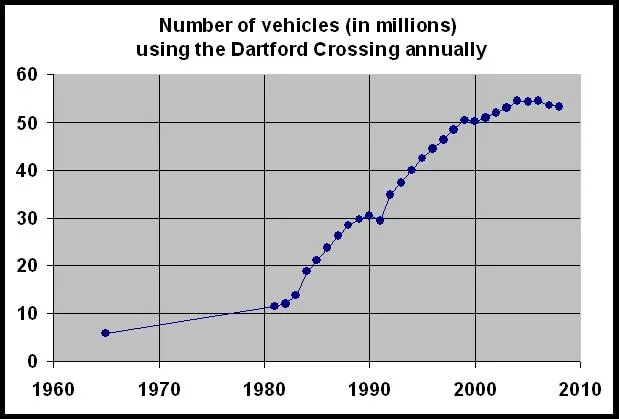
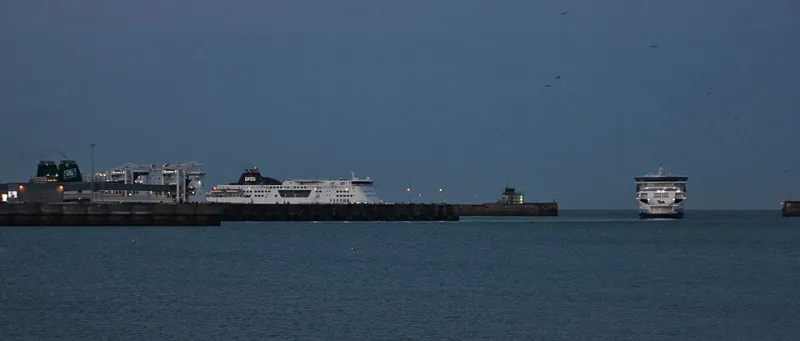
Photo: User:Ultra7, Public domain, via Wikimedia Commons
For a county that sits between London and the continent, Kent's delivery performance is often decided before a parcel reaches its destination. The Dartford Crossing is the clearest pressure point, but it is not an isolated one. A freight backlog at Dover, a tunnel closure near Folkestone or an Operation Brock activation on the M20 can all change the rhythm of courier work across Maidstone, Medway, Ashford and beyond. In 2026, the practical question for SMEs is not whether disruption will happen, but how quickly a delivery plan can adapt when it does.
Why one crossing affects the whole county
The Dartford Crossing carries a steady flow of vans, lorries and cars between Kent and Essex, and from there into the wider national road network. When it slows, couriers arriving from distribution hubs north of the Thames miss collection windows in Kent. Vehicles leaving Kent for London, the Midlands or the north sit in the same queues. Even businesses whose customers are entirely within Kent can feel the effect if their goods arrive through a national hub or if their courier's route uses the M25 to reach the county.
Cross-Channel freight adds a second layer. Ferry and Le Shuttle schedules do not arrive evenly. Border checks, weather and operational delays can release freight in clusters, and those clusters feed onto the M20 and A20 before dispersing towards the M25 and the crossing. A quiet morning at Dartford can become a difficult afternoon if a freight wave arrives at the same time as a road incident.
Three pressures worth tracking
Dartford Crossing demand and incidents
Roadworks, high winds, breakdowns and collision closures all reduce capacity at the crossing. The busiest windows tend to sit around commuter travel, but freight movements can extend the pressure into the middle of the day. A single lane closure can add enough delay to break a multi-drop schedule.
Cross-Channel freight rhythm
Dover and Folkestone are not background details for Kent businesses. They set the pace for a large share of freight entering and leaving the county. When port-bound traffic is held or released, local roads absorb the difference. Couriers working between Ashford, Canterbury and the coast may find their usual routes busier than expected even if their own consignments never leave the UK.
Operation Brock
Operation Brock is a contingency measure used when cross-Channel disruption requires freight to be held. When activated, it can hold port-bound freight on the coastbound M20 between junctions 8 and 9, with a contraflow on the London-bound carriageway. The measure protects the approach to the ports, but it changes journey times on the M20 and can push local traffic onto adjacent routes. SMEs do not need to memorise every detail, but they should know that Brock activation is a signal to review delivery promises, not simply a traffic story for the coast.
Route-planning tactics that protect promised dates
- Classify consignments by crossing dependency. Separate deliveries that must cross the Thames from those that can be served within Kent or routed through an alternative depot. This makes it easier to decide which orders need earlier cut-offs and which can continue on standard services.
- Consolidate crossing work where possible. Sending one fuller vehicle or using a pallet network for suitable consignments can reduce exposure to repeated crossing delays. For smaller items, a national carrier with a well-established hub pattern may be more resilient than several ad hoc journeys.
- Choose crossing windows deliberately. Where the service allows, avoid the worst commuter peaks and monitor live conditions before dispatch. A slightly later collection can sometimes save a much longer delay on the road.
- Build buffers by service level. Standard parcels may need a 45 to 60 minute allowance on crossing routes. Time-critical or multi-drop work may need 90 minutes or more, especially when Brock is active or port traffic is heavy.
- Prepare a fallback before you need it. Identify a second courier, an overnight option or a local fulfilment route for orders that cannot miss their slot. A fallback is only useful if account details, collection times and costs are already agreed.
- Use tracking as a trigger, not a comfort blanket. Set internal alerts for collections that have not scanned by a certain time. The earlier a problem is spotted, the more options remain available.
Setting buffer time without pricing yourself out
Buffers are not padding. They are a way of matching the promise to the route. A blanket extra day on every order can make a Kent SME look slower than its competitors, while no buffer at all can turn a routine crossing delay into a failed delivery.
A tiered approach usually works better. Keep standard deliveries competitive but set earlier cut-offs for routes that depend on the Thames crossing. Offer a timed or premium service with a realistic allowance rather than promising the impossible. Review late rates by route and by service, then adjust buffers where the data shows they are too tight or unnecessarily generous.
Customer communication when the network is under strain
Customers tolerate delay better when they understand it. At the point of booking, describe crossing-dependent deliveries as estimated rather than guaranteed. If a delay becomes known, make contact before the promised window closes. Give a revised window, a brief reason and any options available, such as an alternative address or collection point.
Avoid blaming the customer or hiding behind generic tracking links. A short, plain explanation is more useful: the consignment is held in traffic near the Dartford Crossing, or the M20 is operating under Brock conditions, and the revised delivery window is now a specific time. Train customer service staff to use the same language so that messages do not contradict each other.
A weekly routine for Kent SMEs
A little structure goes a long way. On Monday, review the week's crossing-dependent orders and flag any tight deadlines. Each morning, check National Highways and local traffic updates, along with messages from courier partners. On Friday, review late deliveries, missed collections and customer complaints to see whether the same route or time window keeps causing trouble.
Keep a one-page playbook covering who checks traffic, who contacts customers and which fallback service is authorised. The Dartford Crossing effect is not a reason to avoid the Thames corridor. It is a reason to plan for it with clear routes, honest buffers and communication that arrives before the problem does.