Stone, Glass and Crowds: Courier Deliveries to Kent’s Heritage Attractions
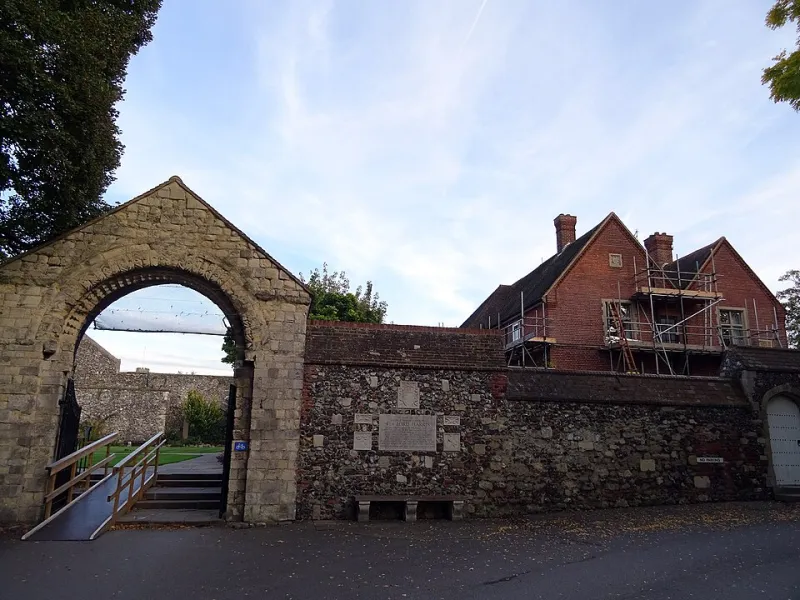
Photo: Spudgun67, CC BY-SA 4.0, via Wikimedia Commons
A delivery to a heritage attraction is rarely a simple drop. The address may be historic, the access route may be pedestrianised, and the receiving team may be balancing conservation duties with the needs of visitors. For suppliers and events teams working across Kent, the risk is not only a late delivery but damage to a listed structure, a blocked public route or an unsafe handover in front of a crowd.
Why heritage sites are not ordinary addresses
Canterbury Cathedral, Dover Castle and Leeds Castle each operate within a distinct set of constraints. Vehicle access may be controlled by a gatehouse, a barrier or a pedestrian precinct. Service yards may be small, surfaces may be uneven, and some routes may be unsuitable for heavy vehicles. Conservation rules can also restrict where equipment is placed, how packaging is stored and whether anything may be fixed to a wall or floor.
The public dimension adds further complexity. A delivery that would be straightforward before opening hours may become difficult once visitors are present. Steps, narrow doorways and temporary exhibitions can change the route from one week to the next. Suppliers should treat the site’s access plan as a live document, not a one-off instruction.
Plan access before the vehicle is booked
For Canterbury, the historic centre’s pedestrian routes and tight streets make vehicle size critical. A courier may need to use a designated service access point rather than the visitor entrance. For Dover Castle, the approach and internal roads may be controlled, and the delivery may need to be coordinated with site operations. At Leeds Castle, event build-ups and visitor periods can alter the available loading areas.
Before booking, confirm the maximum vehicle dimensions, the permitted delivery window and whether a permit or escort is required. Ask whether the vehicle can stop at the final unloading point or whether goods must be transferred to a site vehicle. If the answer is unclear, request a site plan or a short access call with the receiving manager.
Conservation rules and packaging
Heritage sites often require protective measures during deliveries. Floor protection, corner guards and barriers may be needed where goods pass through historic interiors. Drill fixing, adhesive tape and temporary signage may be prohibited without approval. Packaging waste must be removed promptly and not left in public areas.
Suppliers should agree in advance how goods will be wrapped and whether crates, pallets or flight cases can be stored on site. For fragile or high-value items, ask who will inspect the goods on arrival and where the inspection will take place. A delivery note that records condition at handover is more useful than a later dispute about responsibility.
Managing crowds and event timings
Visitor attractions have peak periods that may not match normal business hours. A delivery at midday during school holidays carries a different risk from the same delivery at 7am. Where possible, schedule load-in and load-out outside public opening hours. If that is not feasible, agree a marshalled route, use high-visibility clothing and keep walkways clear.
Events teams should provide a delivery schedule that shows arrival slots, vehicle types and named contacts. Suppliers should confirm who will meet the vehicle and who can sign for goods. For multi-day events, agree where empty packaging and equipment will be stored between deliveries. A site that is safe on day one can become congested by day three if storage is not planned.
A checklist for suppliers and events teams
- Confirm the delivery address and the service access point, not just the public entrance.
- Check vehicle height, width and weight limits, plus any permit requirements.
- Agree a delivery window that avoids public peak periods where possible.
- Identify a named receiving contact and a backup.
- Confirm unloading equipment, tail-lift availability and any transfer arrangements.
- Ask about floor protection, fixing restrictions and packaging removal rules.
- Provide risk assessments and method statements where the site requires them.
- Check insurance and public liability documentation before arrival.
- Record the condition of goods at handover and retain signed delivery notes.
- Plan waste removal and storage for multi-day events.
When a specialist courier is the safer choice
A standard parcel network may be suitable for small, low-value items sent to an administrative office. It is less suitable for large event equipment, fragile displays or deliveries that require a timed handover inside a controlled site. A courier that understands heritage access can plan the vehicle, the crew and the route in advance, reducing the risk of refusal or damage.
The cost of that planning should be weighed against the cost of a failed delivery. A refused vehicle at a cathedral precinct or a blocked service yard at a castle can delay an event, disrupt visitors and create compliance exposure. For Kent’s heritage attractions, the most reliable courier is the one that treats access and conservation as part of the delivery, not as an afterthought.