Pallet, Half-Pallet or Parcel? Right-Sizing Freight for Kent Businesses

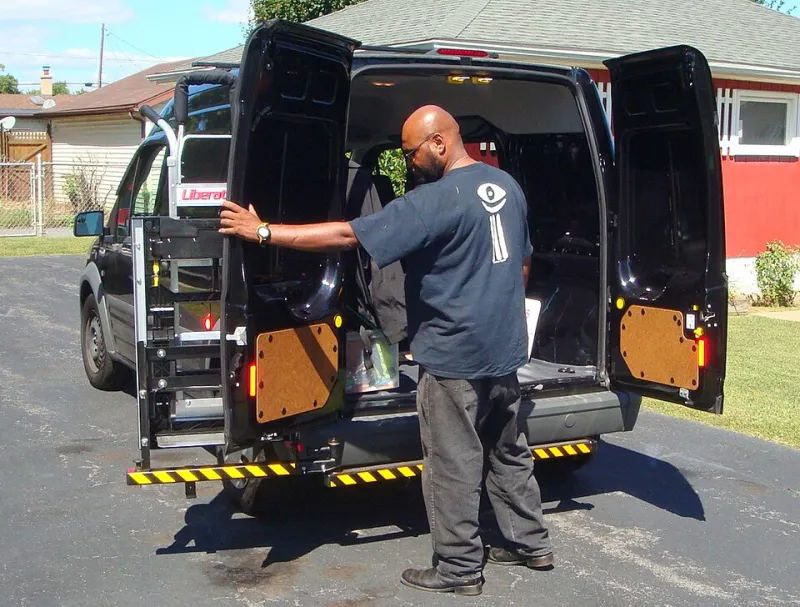
Photo: Southwold1966, CC0, via Wikimedia Commons
Freight decisions are often made at the quotation stage, when the only visible number is the rate per pallet. For many Kent businesses, that number is a poor guide to the real cost. A half-pallet that arrives on a vehicle too large for the yard, or a full pallet that cannot be unloaded without a forklift, can quickly become a false economy. The better question is not which option is cheapest on paper, but which option fits the consignment, the delivery address and the receiving operation.
Start with the kerbside, not the quote
Kent’s delivery geography is varied. A business park outside Ashford may offer a wide yard and a loading bay, while a high-street shop in Canterbury may have no stopping space at all. Rural premises near Sevenoaks or Faversham may be reached by narrow lanes, and some farm or workshop sites have gravel drives that are unsuitable for heavy vehicles. Before comparing pallet rates, confirm what can physically reach the door.
A full pallet normally needs a vehicle with a tail-lift or a forklift at the destination. A half-pallet can often travel on a smaller tail-lift van, which may be the better choice where parking is limited or where the delivery must be made through a standard doorway. Parcels remain the most flexible option for small, low-weight consignments, but they become inefficient when the load is bulky, fragile or difficult to handle manually.
The booking-in barrier
Many receiving sites in Kent do not accept unscheduled deliveries. Retail units, hospitals, schools, industrial estates and shared business centres often require a booking reference, a time window and a named contact. Some also require the courier to report to a gatehouse, use a service yard or wait for an escort.
These requirements matter more than the pallet size. A half-pallet delivered without a booking may be refused, even if the vehicle could physically access the site. A full pallet delivered inside a tight window may incur waiting charges if the loading bay is occupied. Before placing a booking, ask the receiver four questions: what vehicle can access the site, whether a tail-lift is required, whether the delivery must be booked in, and who will sign for the goods.
Where the cost thresholds sit
There is no universal volume at which a half-pallet becomes cheaper than parcels, but there are practical thresholds. If a consignment occupies several parcel spaces, requires two people to lift, or contains items that cannot be stacked, a half-pallet may reduce handling and damage risk. If the load is light but bulky, a tail-lift van may be more economical than a pallet network. If the load is dense, palletised and forklift-friendly, a full pallet can be the most efficient unit.
The calculation should include the whole journey, not just the line-haul rate. Add the cost of the collection, the delivery window, any tail-lift charge, pallet exchange or return, and the time spent by staff receiving the goods. For regular movements, compare the cost per consignment over a month rather than the cost per pallet on a single quote.
Hidden handling charges to challenge
A pallet quote may exclude services that are essential in practice. Tail-lift delivery is sometimes charged separately, as is delivery to a residential or limited-access address. Waiting time after a set period, failed bookings and re-delivery can add further costs. Pallet exchange arrangements also deserve scrutiny: if the receiver cannot return a pallet, a charge may follow.
For Kent businesses, the most common surprises are access-related. A vehicle may be unable to enter a pedestrianised high street, a rural lane may be unsuitable for an articulated lorry, or a site may lack a forklift. A cheap quote that assumes unrestricted access is not a like-for-like comparison. Ask the courier to confirm what is included, what is excluded and what happens if the receiver cannot unload.
A simple decision path
First, measure the consignment and confirm its weight and stackability. Second, check the delivery address for vehicle restrictions, parking, yard space and unloading equipment. Third, confirm the receiver’s booking-in rules and signature requirements. Fourth, ask for a quote that states the vehicle type, tail-lift provision, waiting terms and any pallet charges. Finally, trial the arrangement on a quieter day before relying on it for a peak trading period.
The right answer may change by season. A half-pallet that suits a shop’s weekly replenishment may be unnecessary for a one-off installation, while a full pallet that works in a warehouse may fail at a town-centre studio. Right-sizing freight is less about finding the cheapest unit and more about matching the unit to the delivery reality. In 2026, with access restrictions and handling costs under closer scrutiny, that discipline is worth building into every quotation.