Proof of Passage: Auditing Delivery Emissions Claims in Kent Supply Chains
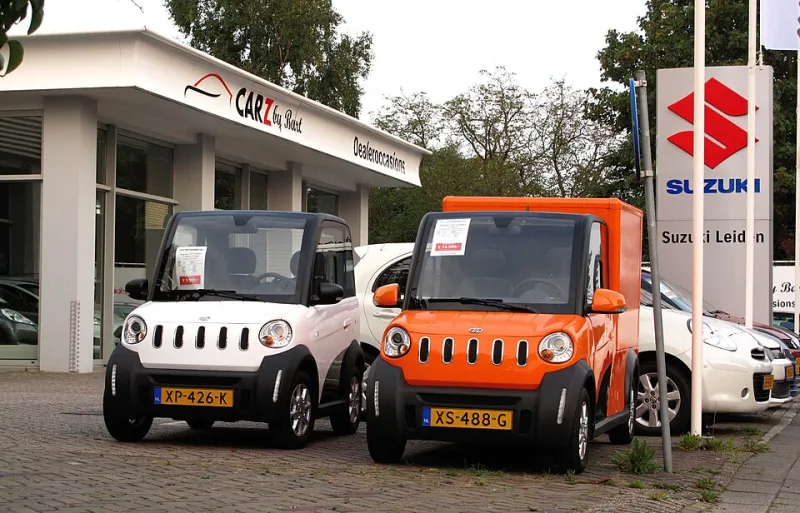
Photo: Rutger van der Maar, CC BY 2.0, via Wikimedia Commons
Procurement teams are increasingly adding a familiar line to courier questionnaires: what are the emissions of this delivery? For many Kent businesses, the honest answer is that the figure is not yet known with confidence. A sustainability page may promise a greener fleet, and a sales pack may mention carbon neutrality, but neither is the same as an auditable delivery emissions figure. The task for 2026 is to turn a broad corporate claim into evidence that can survive a tender review, a customer enquiry or a annual reporting cycle.
That means treating the carbon figure as part of the commercial record, alongside price, transit time and claims performance. It should be specific to the service being bought, repeatable over time and supported by a method that a finance or procurement team can understand. The following approach is designed for Kent SMEs that buy courier services rather than operate their own fleets.
Begin with the consignment, not the corporate pledge
A company-wide emissions reduction target says little about a parcel moving from an Ashford warehouse to a customer in Tunbridge Wells. What matters is the emissions attributable to the consignment, or to a representative route, under a defined methodology. Ask for a figure per parcel, per kilogram or per consignment, and ask which unit is being used. A per-parcel figure is useful for website copy and customer communication; a per-kilogram figure is more useful when comparing different load types or negotiating consolidated deliveries.
The boundary of the calculation also needs to be clear. A courier may report only the fuel burned by its own vehicles, or it may include subcontracted legs, upstream fuel production and the last-mile van. For most Kent businesses, a well-to-wheel figure that covers the full delivery journey is more meaningful than a tailpipe-only number. Ask whether the methodology follows a recognised framework such as the GLEC Framework or ISO 14083, and ask for the version and date of the factors used.
Four tests of a credible delivery carbon figure
Route-level reporting. National averages are convenient but blunt. Kent's delivery geography is not uniform: a Dartford distribution run, a rural lane near Sandwich and a multi-drop round in Canterbury have different profiles. Ask whether the courier can provide emissions data by lane, by depot-to-depot movement or by route type. A modelled figure is acceptable if the model is disclosed; a metered figure from telemetry is stronger. The key question is whether the number changes when the route, vehicle or load changes.
Vehicle mix and load factor. An electric van is not automatically the lowest-carbon option for every consignment. A lightly loaded electric van making a long detour may compare poorly with a well-filled diesel vehicle on a direct route. Ask what proportion of the relevant service is electric, what the average payload utilisation is and how empty running is treated. For Kent businesses near the M20, A2 and Dartford Crossing, congestion and idling also affect the real-world figure. A courier that can explain these variables is more credible than one that simply lists electric vehicle numbers.
Consolidation options. Emissions per parcel fall when vehicles are fuller. Ask whether the courier can hold non-urgent consignments for groupage, combine collections from neighbouring businesses or use a local micro-fulfilment point to shorten the final mile. These choices involve trade-offs with speed and stock planning, so they should be discussed as service options rather than presented as free savings. A courier that offers a consolidation option without explaining the delay is not giving a procurement team enough to work with.
Offset claims. Carbon offsets can play a role, but they are not a substitute for reducing emissions in the first place. If a courier claims carbon neutrality, ask for the registry, the project type, the vintage, the retirement certificate and the verification standard. Ask how much of the claim is reduction and how much is offset. A credible partner will separate the two and will not use an offset to obscure a lack of route-level data.
A tender-ready checklist for Kent buyers
When issuing a courier tender or reviewing an existing contract, put the following questions in writing. First, what emissions figure will be provided for each service level, and in what unit? Second, what is the methodology and boundary, including subcontracted legs and well-to-wheel factors? Third, what proportion of the service uses electric vehicles, and what is the average load factor? Fourth, what consolidation or grouped delivery options are available, and what transit-time impact do they have? Fifth, what offset products are used, and can the retirement certificates be supplied? Sixth, how often will the data be refreshed, and can a sample report be shared before contract award?
For website copy, avoid presenting an estimate as a measured fact. Use language such as 'estimated delivery emissions' and state the methodology in a footnote or linked page. For annual reporting, keep a record of the assumptions, the data source and the date of the calculation. If the business is within scope of UKStreamlined Energy and Carbon Reporting, delivery emissions may form part of the wider picture, but the courier figure should still be traceable to a specific method rather than absorbed into a general estimate.
Reading the answer without being dazzled
Compare like with like. A next-day service and a two-day consolidated service are not directly comparable on emissions alone, because they offer different customer promises. Normalise the figures per parcel or per kilogram, check the boundary and ask for a trend rather than a single snapshot. Be cautious of phrases such as 'eco fleet', 'green delivery' or 'carbon neutral' without a method, a boundary and a date. Greenwash rarely announces itself; it usually appears as a confident adjective with no supporting schedule.
Kent's geography adds a practical dimension. The county's motorway corridors, rural lanes, cross-Channel links and London-facing distribution routes create very different delivery profiles. A courier that can explain how it routes around the Dartford Crossing, consolidates loads in west Kent or uses local depots for eastern Kent is more likely to produce a figure that reflects reality. The carbon receipt should not be a decorative certificate. It should be a working document that helps a Kent business buy better, report honestly and answer the questions its own customers are starting to ask.