Rethinking Free Postage: What Delivery Really Costs Kent Retailers in 2026
Photo: Internet Archive Book Images, No restrictions, via Wikimedia Commons
Free delivery is one of the most effective phrases in online retail. It is also one of the most misunderstood. For many Kent SMEs, the offer is not a marketing cost absorbed by scale. It is a discount applied to every order, whether or not the customer would have paid for delivery anyway.
This is not an argument against free delivery in every case. It is an argument for knowing what the offer costs before it becomes permanent. In 2026, with courier rates under pressure and customer expectations high, the retailers that protect margin will be the ones that price delivery honestly rather than hiding it in the product price.
The word free is doing too much work
When a retailer advertises free delivery, three things usually happen. The customer sees a benefit. The checkout removes a friction point. The business absorbs a cost that must be recovered somewhere else, either through product margin, higher prices or lower service quality.
That recovery is not always obvious. A £50 order with £18 of product margin and £6.50 of all-in delivery cost loses 36 per cent of its contribution if delivery is free. If the order is returned, the loss can be greater still. The retailer may still make a sale, but it is a thinner sale than the headline suggests.
The cost stack behind a parcel
A delivery charge should be built from the parcel up. The main components are packaging, pick-and-pack labour, courier cost, failed-delivery handling and returns.
Packaging is not just the box. It includes void fill, tape, labels, bags and the labour to assemble the pack. For fragile or oversized Kent-made goods, it may also include double boxing or bespoke protection. These costs are small per order but consistent across every order.
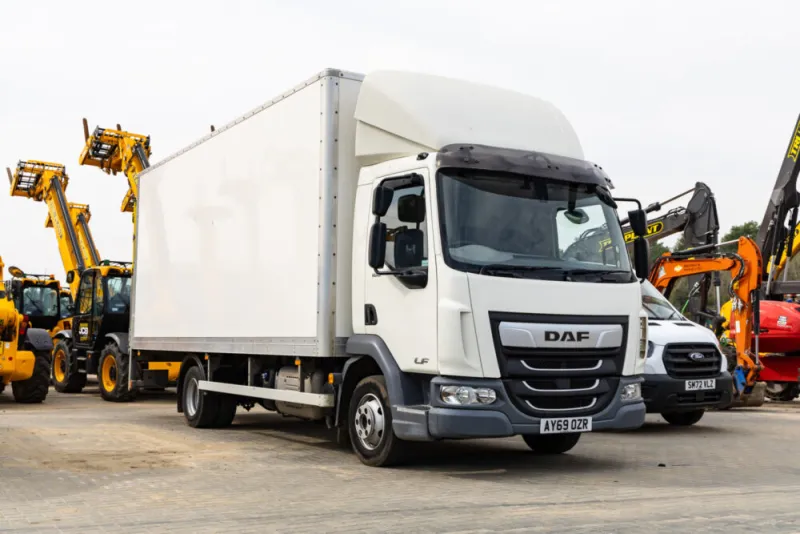
Courier cost is the most visible line, but it is not a single rate. It varies by service, weight, dimensions, destination and surcharge. A local Kent delivery may be cheaper than a national next-day service, but rural addresses and low-density routes can carry their own premium. Fuel surcharges and peak capacity charges should be built into the planning rate, not treated as annual surprises.
Failed deliveries are the quiet cost. A missed delivery can lead to a redelivery charge, a call to customer service, a rescheduled slot or a refund. Each of those has a labour cost. If the address was entered incorrectly, the courier may still charge for the attempt. A retailer that offers free delivery without tracking the cost of failure is pricing only the successful parcels.
Returns add another layer. A returned parcel may require a label, a collection, inspection, repacking and restocking. The original delivery cost is usually not recovered. In fashion and homewares, returns can be a normal part of trading, but they are not free to process. A delivery charge that ignores returns is a subsidy for the least profitable orders.
Why customers say they want free delivery
Customers rarely want a courier charge as an abstract idea. They want certainty. They want to know the total cost before they commit, and they want the delivery promise to be clear. Many baskets are abandoned not because delivery costs £4.95, but because the charge appears late, seems disproportionate or arrives with an unclear timescale.
That distinction matters. A retailer can charge for delivery and still convert well if the charge is transparent, the service is clear and the total price feels fair. The problem is not the existence of a delivery fee. The problem is the surprise.
A framework for honest delivery pricing
Start with a floor cost. Calculate the true landed cost of a typical parcel for each service you offer: standard, tracked, next-day and collection. Include packaging, labour, courier rate and an allowance for failed deliveries and returns. Do not use the cheapest possible parcel as the benchmark if most orders are heavier or larger.
Next, decide what the business can absorb. Some retailers choose to subsidise delivery above a threshold because the average order value justifies it. That can work, but the threshold should be based on margin, not on a competitor’s website. If the average order is £45 and the delivery cost is £6, a free-delivery threshold of £50 may simply encourage customers to add a low-margin item. A threshold of £65 may protect contribution without losing the basket.
Then create service tiers. A standard tracked service, a faster service and a collection option give customers a choice without forcing the retailer to absorb the fastest cost on every order. The cheapest option should still be reliable. A budget service that creates support calls is not a saving.
Price returns explicitly or include them in the margin. A free returns policy can be a powerful selling point, but it should be a deliberate decision. If returns are free to the customer, the cost belongs in the delivery or product price. If returns are charged, say so clearly before checkout.
Finally, test the change. Move one group of products or one region to a revised delivery structure and compare conversion, average order value and support contacts. Kent is a useful test market because it contains dense urban areas, rural lanes and cross-Channel connections within a relatively small geography.
The Kent-specific pressure points
Kent retailers face a delivery market that is not uniform. A parcel to central Canterbury may be straightforward. A parcel to a remote part of the Weald or the Isle of Sheppey may take longer and cost more to serve. Cross-Channel orders add customs and port uncertainty. Local courier rates reflect those realities.
That does not mean rural customers should be penalised unfairly. It means the delivery charge should reflect the service being provided. A single national free-delivery promise can quietly encourage the business to over-serve expensive addresses and under-price cheap ones.
How to tell customers without losing them
Show delivery costs early. A product page that says delivery from £3.95 is more honest than a checkout surprise. Use a progress bar for free-delivery thresholds only if the threshold is achievable and the economics work. Explain what the customer gets: tracking, a named day, collection or a slower but cheaper option.
Avoid using free when the cost is included in the product price unless that is genuinely how the business wants to present it. Included delivery is a clearer phrase. It tells the customer that delivery is part of the offer, not a gift from nowhere.
The margin test
Free delivery can be a sound strategy for a Kent retailer with high margins, predictable parcel costs and a clear average order value. It is a poor strategy for a business that has never calculated its all-in delivery cost and is competing on price alone.
The practical question is not whether customers like free delivery. They do. The question is whether the business can afford to keep offering it after packaging, failed deliveries, returns and local courier rates have been counted. In 2026, honest delivery pricing is not a conversion killer. It is a margin-protection tool that customers can accept when it is presented clearly.