Branching Out from Duplicate Pickups: A Kent Courier Consolidation Model

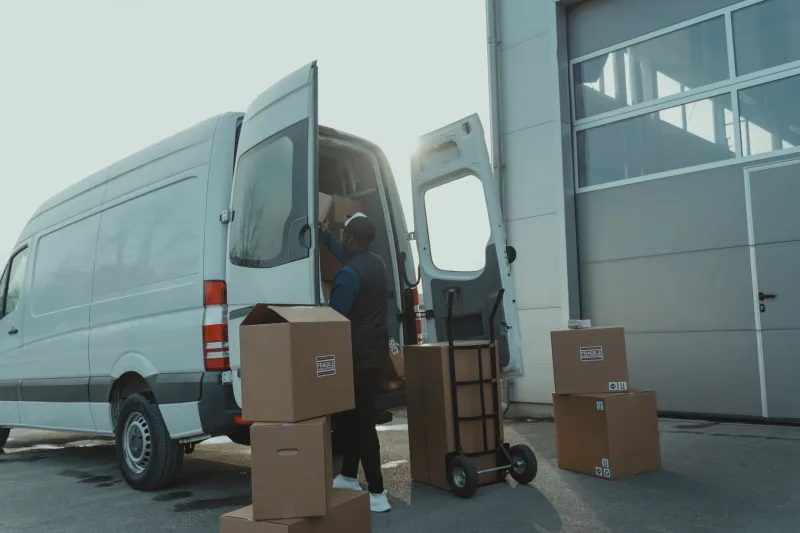
Photo: courier van depot loading bay UK branch network, via images-wixmp-ed30a86b8c4ca887773594c2.wixmp.com
Kent businesses with more than one office, depot or shop face a familiar problem: each site books its own courier collection, each site guards its own cut-off time, and the result is a series of partly empty vans crossing the same corridors. For a county with a dense branch estate but a relatively narrow road network, that pattern is costly and difficult to see. Consolidating courier runs is not simply a matter of telling branches to share a van. It requires a timetable that respects local handovers, carrier deadlines and the practical limits of internal transport.
The hidden cost of branch-by-branch booking
At first glance, separate bookings look tidy. Each branch has its own account, its own manifest and its own point of contact. In practice, the arrangement produces duplicate journeys between towns such as Maidstone, Canterbury, Ashford and Dartford, often within the same hour. The visible invoice line is only part of the cost. Staff time is duplicated, packaging is prepared to different standards, and no single person can see how many consignments are moving along the same route.
For a Kent retailer or professional services firm, the problem intensifies when sites use different carriers or service levels. One branch may book a next-day collection while another pays for a timed service that is not strictly needed. A branch in CT postcodes may be ready by mid-morning, while a DA site needs a later pickup because of its own customer opening hours. Without a shared view, these differences become permanent exceptions rather than scheduling variables.
The objective in 2026 should be consolidation without centralisation at any cost. A single collection point can reduce duplicate courier charges, but it can also push local handover deadlines earlier and add handling risk. The right model depends on volume, goods type and how much internal transport the business can reliably provide.
Direct pickups and hub-and-spoke runs compared
Direct-to-branch pickups are the simplest option. The carrier collects from each site, the branch retains custody until handover, and accountability is clear. This suits high-volume sites, secure or high-value consignments, perishable goods and branches with late customer-facing cut-offs. It is also easier to operate when a site has no secure holding area for consolidated goods. The drawback is duplication: several collections may serve the same corridor, and the business has less leverage to negotiate a joined-up rate.
Hub-and-spoke runs reverse the logic. Branches send consignments by internal van to a central depot or consolidation point, where one carrier collection takes the combined manifest. This can lower courier costs, improve manifest visibility and reduce the number of carrier visits. It also creates a new dependency: the internal transfer must be punctual, and goods must be handled twice. A missed internal van can turn a routine collection into a failed cut-off.
Most Kent branch networks are better served by a hybrid. Direct pickups remain sensible for sites with high daily volume, late cut-offs or special handling needs. Hub-and-spoke works well for lower-volume sites that sit near a shared depot or along a natural corridor. The practical task is to cluster sites by route and deadline rather than by reporting line.
Mapping internal deadlines across CT, ME, DA and TN
Postcode groups are not a perfect proxy for road distance, but they give Kent businesses a useful starting point for mapping internal transfer deadlines. The table below is illustrative and should be validated with each carrier and internal transport provider.
| Postcode group | Typical Kent focus | Consolidation logic | Internal handover buffer |
|---|---|---|---|
| CT | Canterbury, Thanet, Dover and Folkestone | East Kent consolidation point or direct pickup for late cut-offs | 60 to 90 minutes before carrier cut-off |
| ME | Medway, Maidstone and Swale | Medway or Maidstone hub for shared runs | 45 to 75 minutes before carrier cut-off |
| DA | Dartford, Gravesham and Swanley | North-west Kent hub with strong Thames corridor links | 60 to 90 minutes before carrier cut-off |
| TN | Tonbridge, Tunbridge Wells, Sevenoaks and Ashford | West Kent and Ashford corridor hub | 60 to 90 minutes before carrier cut-off |
The buffer is the period between the branch handover and the carrier cut-off. It must cover loading, internal travel, unloading, scanning and any reconciliation. A branch that hands over at 15:00 for a 15:30 carrier cut-off is not allowing a realistic buffer if the consolidation point is twenty minutes away. The timetable should be built backwards from the carrier deadline, not forwards from when staff finish packing.
A simple weekly scheduling model
A weekly model gives branches predictability without requiring a complex transport management system. The aim is to set the pattern once, review exceptions each week and avoid ad hoc duplicate bookings.
| Day | Focus | Practical action |
|---|---|---|
| Monday | Demand review | Confirm expected volumes by branch, flag high-value or oversized consignments, and set the week's corridor plan. |
| Tuesday | Corridor A | Run the consolidated collection for one cluster, such as DA and ME sites feeding a shared hub. |
| Wednesday | Corridor B | Run the consolidated collection for a second cluster, such as CT and TN sites. |
| Thursday | Overflow and exceptions | Keep direct pickups available for high-volume or late-cut-off branches; review any missed internal transfers. |
| Friday | Cut-off audit | Confirm next week's carrier deadlines, record failed handovers and adjust buffers where needed. |
This pattern works best with a two-tier timetable. The first tier is the branch handover time, which staff can see and plan around. The second is the carrier cut-off, which the coordinator owns. Branches should not book direct collections outside the plan unless an exception is logged and approved. That single rule prevents the gradual return of duplicate pickups.
Governance: one timetable, one owner
Consolidation needs a coordinator rather than a committee. One person should maintain the cut-off register, publish the weekly schedule and act as the escalation point when an internal transfer is at risk. Branches retain responsibility for packing, labelling and readiness, but they work to a shared timetable.
Useful measures include the number of duplicate collections per corridor, cost per consignment, internal transfer punctuality and missed carrier cut-offs. A four-week pilot on one corridor is usually enough to reveal whether the model is saving money or simply moving delay upstream. If a hub-and-spoke run causes repeated late handovers, the answer may be a later direct pickup for that site rather than a tighter internal deadline.
For Kent businesses with multiple sites, the prize is not a single centralised collection point. It is a network in which each branch knows its handover time, each corridor has a clear owner and each courier run carries as much consignment as it reasonably can. That is a more durable route to lower costs than simply adding another van to the same congested timetable.