Leave It Where? Building Defensible Delivery Instructions for Kent Retailers
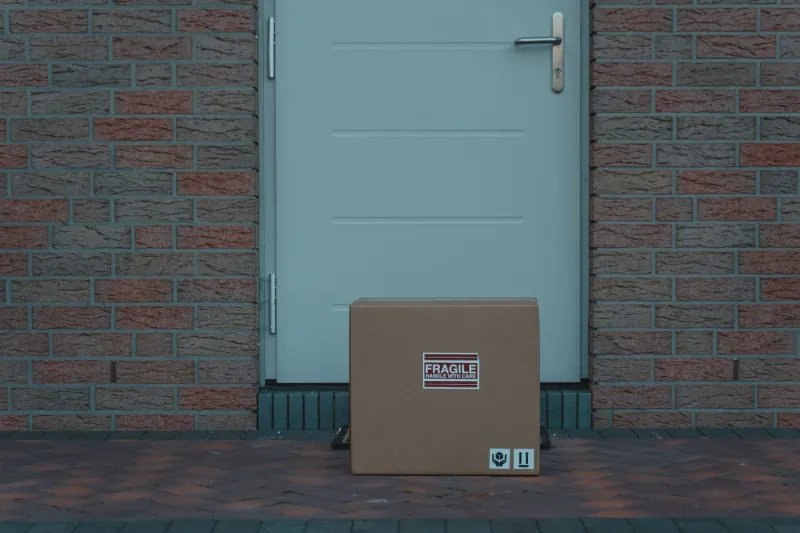
A failed delivery is rarely a single event. It is usually the end of a chain of assumptions: that the customer will be at home, that the courier will find the side gate, that a neighbour will accept the parcel, or that a note through the door will be enough. In Kent, where a delivery round can move from dense town-centre flats to isolated lanes within a few miles, those assumptions are tested daily. The instruction to 'leave it safe' is one of the most common and least precise requests in ecommerce. For retailers, it can look like convenience. In practice, it often transfers risk to the courier and then back to the retailer when the customer says the parcel never arrived.
Why vague instructions create disputes
A safe place is not a standard category with a fixed meaning. It is a preference, and preferences vary. One customer may mean the porch. Another may mean the bin store, the rear garden, a named neighbour, or a business reception desk. If the instruction does not say which, the courier has to exercise judgement. If the parcel then goes missing, neither party has a shared record of what was agreed or what was done. The result is a dispute that is difficult to resolve fairly.
Kent sharpens the problem. A property may be a flat above a shop in Canterbury, a shared entrance in Tunbridge Wells, a unit on an Ashford business park, or a farmhouse reached by a narrow lane near Sevenoaks. A phrase such as 'leave in a safe place' carries different risks in each setting. Retailers should therefore treat delivery instructions as part of the order record, not as an informal afterthought.
Designing instructions that are specific and fair
The first step is to stop relying on free-text boxes as the primary way to capture safe-place requests. Free text invites ambiguity. A better checkout presents a small set of pre-set options that suit the property type, with a free-text field used only to add detail. Options might include a named neighbour, a porch, a meter cupboard, a letterbox where the parcel fits, or no safe place at all. The customer should have to confirm the choice explicitly rather than leaving it implicit.
The second step is to separate convenience from authority. A customer may prefer a safe place, but the retailer should be clear about what happens if the courier cannot find it, if the location is accessible to the public, or if the item is too large or too valuable for that method. For higher-value consignments, a signature or an in-person handover may be the more appropriate default. The checkout should state the consequence of each option in plain English, without hiding it in general terms and conditions.
Retailers should also avoid language that implies every property has a suitable hiding place. Some do not. Some customers live in flats with communal halls, or in homes where the front door opens directly onto the pavement. A visible 'no safe place' option is not a failure of customer service. It is a route to fewer failed attempts and fewer disputes.
Proof of delivery: the evidence standard matters
A safe-place instruction is only as good as the evidence that follows it. Retailers should agree with their courier what proof of delivery will be captured for each service level. A photograph of the parcel in the stated location is useful, but only if it shows enough context to identify the property and the place. A close-up of a parcel against a blank door is weak evidence. A wider image showing the door, house number or distinguishing feature is stronger.
Other evidence may include a timestamp, a geo-location marker, a photograph of the delivery note, or an exception code when the stated safe place was not available. For some consignments, a signature remains appropriate. The point is not to demand the maximum evidence for every parcel, which can slow rounds and frustrate customers. The point is to match the evidence to the risk and to make sure the retailer can access it when a query arises.
Proof of delivery should also be shared with the customer promptly. A link to the delivery record, sent by email or text, reduces the number of 'where is my parcel' enquiries and gives the customer a clear route to challenge the outcome if something looks wrong.
Exception workflows that reduce friction
Even well-designed instructions will sometimes fail. The courier may find the gate locked or the named neighbour unavailable. The retailer needs a defined exception workflow, not an improvised one. The workflow should say what the courier does first, what evidence is recorded, how quickly the customer is notified, and what options follow. These may include a second attempt, delivery to a local collection point, return to depot, or a refund or replacement process.
The options should be realistic for Kent. A collection point in Maidstone or Dover may be convenient for a town-centre customer but impractical for someone in a rural part of the county. The retailer should avoid offering a resolution that sounds helpful but creates a second failure. Clear service levels and a single point of contact for the courier and the customer reduce the risk of the query being passed between parties.
A practical audit checklist for checkout and dispatch
Retailers can use the following checklist to review their current arrangements.
- Checkout page: replace open-ended safe-place prompts with pre-set options, including a clear 'no safe place' choice.
- Consent: require the customer to confirm the selected option and record the time and order reference.
- Wording: explain in plain English what the courier will do if the safe place is unavailable.
- Property detail: ask for a short access note only where it is genuinely useful, such as a gate code or business reception hours.
- High-value orders: default to signature or in-person delivery unless the customer makes an informed alternative choice.
- Dispatch notes: reproduce the customer's safe-place instruction exactly, not a paraphrase.
- Exceptions: flag orders where the instruction is incomplete, contradictory or unsuitable for the item size.
- Courier briefing: confirm the evidence standard for photographs, signatures and exception codes.
- Customer communication: send proof of delivery promptly and provide a clear query route.
- Review: sample disputed deliveries each month and update the checkout wording where patterns emerge.
The commercial case for clarity
Clear delivery instructions do not eliminate every failed delivery. They do, however, give retailers and couriers a shared record of what was requested and what was done. That record is valuable during peak periods, when volumes rise and the margin for informal judgement falls. It also supports a more neutral conversation with customers: the question becomes whether the agreed instruction was followed, not whether the courier guessed correctly.
For Kent retailers preparing for the remainder of 2026, the audit is worth doing before the busiest weeks arrive. A short review of checkout options, dispatch notes and proof-of-delivery standards can reduce disputes without making delivery less convenient. The aim is not to remove flexibility. It is to make flexibility explicit, evidenced and fair to both the customer and the business.