No Number, No Name: Delivering to Kent's New-Build Estates Before the Postcode Catch-Up
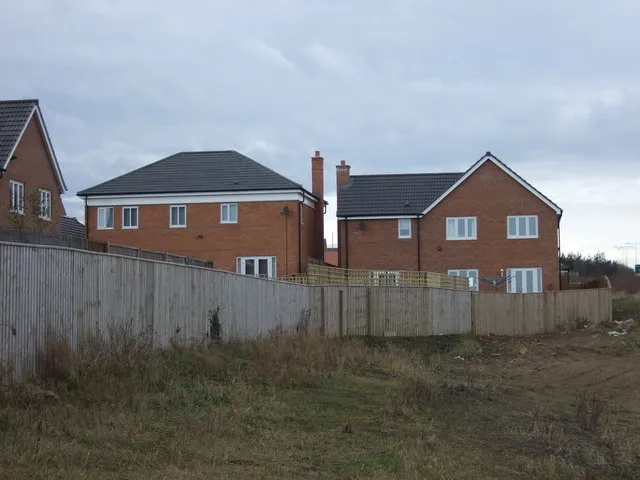
Photo: JThomas , CC BY-SA 2.0, via Wikimedia Commons
The address that does not exist yet
Somewhere between the completion certificate and the postcode file, there is a gap. A family moves into a house on a Kent development in early spring; the street sign is up, the bins have been delivered, the broadband is connected. But the address sits at the wrong point in the mapping data, or has no point at all, and the courier's route planner sends a van to a field entrance half a mile away.
Kent has been producing this gap at scale. Ebbsfleet Garden City continues to add phases; Chilmington Green near Ashford, Otterpool Park outside Folkestone, and the expansions around Whitfield, Manston and the Thanet hinterland are all delivering homes in tranches. Infill sites of a dozen houses appear in villages around Sevenoaks and Tonbridge with almost no notice at all. Each is a small addressing problem, and collectively they account for a disproportionate share of failed deliveries in the county.
Four ways it goes wrong
Unregistered postcodes. A new postcode is allocated by the local authority's street naming and numbering team and then works its way into the national address products used by couriers and retailers. Until it does, the address may simply be rejected at the point of order, or accepted and silently mangled.
Pins in the wrong place. Navigation systems often default to the centroid of a development, the site compound, or the entrance to the first phase. That is fine for a groundworker and useless for a driver with a wardrobe.
Unfinished access roads. Temporary names, unmade surfaces, contractors' compounds and one-way systems that change weekly. A road that carries a name on a plan may carry a different one on the ground.
Duplicate phases. Estate roads often repeat a naming theme, and a development may have two 'Harvest Lanes' in different phases. The house number alone rarely resolves it.
For developers: close the gap early
- Engage the local authority's street naming and numbering team as phases are signed off, not after occupation.
- Confirm when each phase is submitted into the national address and postcode products, and notify the delivery sector — Royal Mail, the main parcel networks — at the same time.
- Keep an address schedule per phase, listing plot number, house number, street name and postcode, and share it with the site office.
- Maintain signage at the entrance and at every junction inside the site for as long as construction continues elsewhere.
- Operate the site office or marketing suite as a receiving point for parcels until a phase is fully occupied and addressed.
- Publish a delivery note for drivers: access point, restrictions, speed limits, where not to park.
For retailers and SMEs: label discipline
A label has perhaps four lines of useful space and most businesses spend them badly. A workable standard for a new-build delivery is:
- Recipient name and mobile number (not optional).
- House number or plot, and street name as registered.
- Development name and phase, in brackets.
- Postcode, plus the nearest established landmark or the road the site is entered from.
Add a short delivery instruction field at checkout and make it visible to the courier, not buried in an order record. Encourage customers to write 'Phase 2, off the B-road behind the garden centre' rather than 'please leave safe'.
Briefing the driver
A map pin is a guess; a person is a fact. Where a customer is willing, a mobile number and permission to call on approach converts most of these deliveries from a failure into a two-minute conversation.
A location tool that encodes a precise point is useful for identifying the right front door, but it does not describe which of two access roads is open, whether the barrier needs a code, or that the road shown on the map is a landscaped mound. Pair the coordinate with a sentence.
Drivers should also be told about parking. New-build streets are frequently double-parked with contractor vans, and a delivery that arrives during the morning concrete pour will be refused access by the site team regardless of what the label says.
When to use a local contact instead
Three situations justify bypassing the address entirely. The first is a first delivery to a phase that has only just been occupied — send it to the site office or the developer's marketing suite and let them hand it over. The second is a bulky or high-value consignment where a failed attempt costs more than a same-day local run. The third is any address where the customer cannot be reached by telephone; without a contact, a redelivery attempt simply repeats the same mistake at greater cost.
The cost of getting it wrong
A failed new-build delivery is rarely just one wasted journey. It is a redelivery charge, an inbound call, an apology, a replacement slot and, quite often, a returned order. Multiply that by the number of phases currently under occupation across Kent, and the addressing gap stops looking like an administrative curiosity and starts looking like a line in the fulfilment budget.
The fix is not technological. It is a label with a landmark on it, a phone number that works, and a developer who registers a street before the first family moves in.